Implementing Subnetting Strategies in Azure VNets for Scalable and Secure Workload Isolation
Designed a scalable and secure Azure VNet subnetting strategy for a healthcare SaaS provider, enabling workload isolation, HIPAA compliance, and future-proof scalability.
Technologies
Challenges
Solutions
Key Results
Isolated workloads with NSGs and UDRs, reducing lateral movement risk
network security
Future-proof IP allocation for dynamic growth
scalability
Met HIPAA requirements with strict data flow controls
compliance
Avoided downtime from subnet reconfiguration
operational efficiency
Implementing Subnetting Strategies in Azure VNets for Scalable and Secure Workload Isolation
AMJ Cloud Technologies collaborated with a healthcare SaaS provider specializing in data analytics to migrate their monolithic application to a microservices-based architecture on Microsoft Azure. This case study details how we implemented a subnetting strategy within Azure Virtual Networks (VNets) to achieve workload isolation, scalability, and HIPAA compliance.
Situation
The client aimed to modernize their infrastructure by transitioning to a microservices architecture on Azure. This required a highly segmented network design to isolate workloads such as frontend APIs, backend databases, and internal services, while ensuring efficient communication and compliance with stringent healthcare regulations.
Challenge
The migration presented several architectural challenges:
- Designing subnets to support future growth without IP conflicts.
- Isolating critical workloads to meet HIPAA compliance requirements.
- Implementing custom traffic routing for inspection and audit logging.
- Adopting a Zero Trust model to minimize lateral movement and reduce breach impact.
Solution: Subnet-Centric VNet Design
We architected a subnetting strategy focused on security, scalability, and maintainability, implemented over an eight-week period by a team of cloud architects and network engineers.
Action
The solution incorporated the following components:
-
Logical Segmentation of Services:
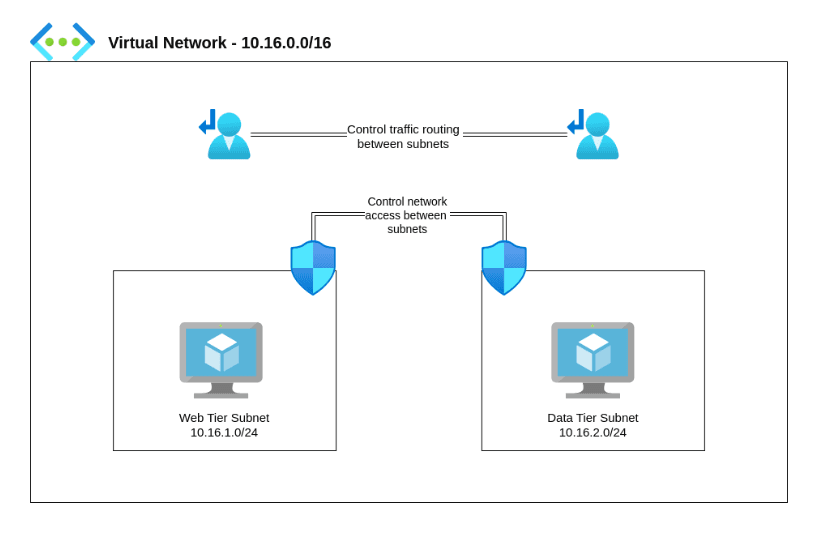
- Divided the Azure VNet into distinct subnets: Web Tier Subnet, App Tier Subnet, Data Tier Subnet, and Management Subnet.
- Applied workload-specific policies and access controls to each subnet for granular governance.
-
Custom Route Tables (UDRs):
- Configured user-defined routes to control traffic flow, routing inter-tier traffic (e.g., Web Tier to Data Tier) through a Network Virtual Appliance (NVA) for packet inspection and logging.
-
Enforcement of Security Policies:
- Applied Network Security Groups (NSGs) at the subnet level to enforce strict inbound and outbound rules.
- Restricted Data Tier Subnet access to specific database ports from the App Tier Subnet, blocking unnecessary connections.
-
Scalable Address Planning:
- Provisioned the VNet with a 10.16.0.0/16 address space, allocating subnets like 10.16.1.0/24 for the Web Tier to support future growth.
- Reserved unused IP blocks to allow new subnets or expansion without redeployment.
-
IPv6 Readiness:
- Designed subnets with /64 prefixes to comply with Azure’s IPv6 standards, enabling future dual-stack deployments.
-
Testing and Validation:
- Conducted tests to verify workload isolation, traffic routing, and compliance with HIPAA requirements.
- Monitored network performance and security metrics to ensure alignment with client goals.
Results
The subnetting strategy delivered significant outcomes:
- Improved Network Security: Workload isolation with NSGs and UDRs reduced the risk of unauthorized access and lateral movement, aligning with Zero Trust principles.
- Future-Proof Architecture: The IP allocation strategy enabled dynamic scaling without network rearchitecture.
- Regulatory Compliance Met: Strict data flow controls and logging supported HIPAA compliance requirements.
- Operational Efficiency: Careful address planning eliminated downtime risks from subnet reconfiguration.
Technologies Used
- Microsoft Azure Virtual Network (VNet): Provided the foundation for network segmentation.
- Azure Network Security Groups (NSGs): Enforced granular security policies.
- User-Defined Routes (UDRs): Enabled customized traffic routing.
- Azure Network Virtual Appliances (NVAs): Facilitated packet inspection and logging.
- IPv4 /16 Address Planning and Subnetting: Ensured scalable IP management.
- IPv6 /64 Prefix Subnet Design: Prepared the network for future IPv6 adoption.
Key Use Cases
This subnetting strategy is ideal for:
- SaaS providers transitioning to microservices architectures.
- Organizations requiring strict workload isolation for compliance.
- Businesses needing scalable and secure cloud network designs.
Key Takeaways
Effective subnetting in Azure VNets is critical for building secure, scalable, and compliant cloud architectures. By implementing logical segmentation, customized routing, and forward-thinking IP planning, we enabled the healthcare SaaS provider to achieve a resilient network backbone that supports their business and regulatory needs. AMJ Cloud Technologies is dedicated to delivering tailored cloud solutions for complex infrastructure challenges.
Ready to optimize your Azure VNet subnetting strategy? Contact us to explore how AMJ Cloud Technologies can help.
Architectural Diagram
Need a Similar Solution?
I can help you design and implement similar cloud infrastructure and DevOps solutions for your organization.